
Why Delay Analysis Is Rarely Done in Nigerian Construction Projects
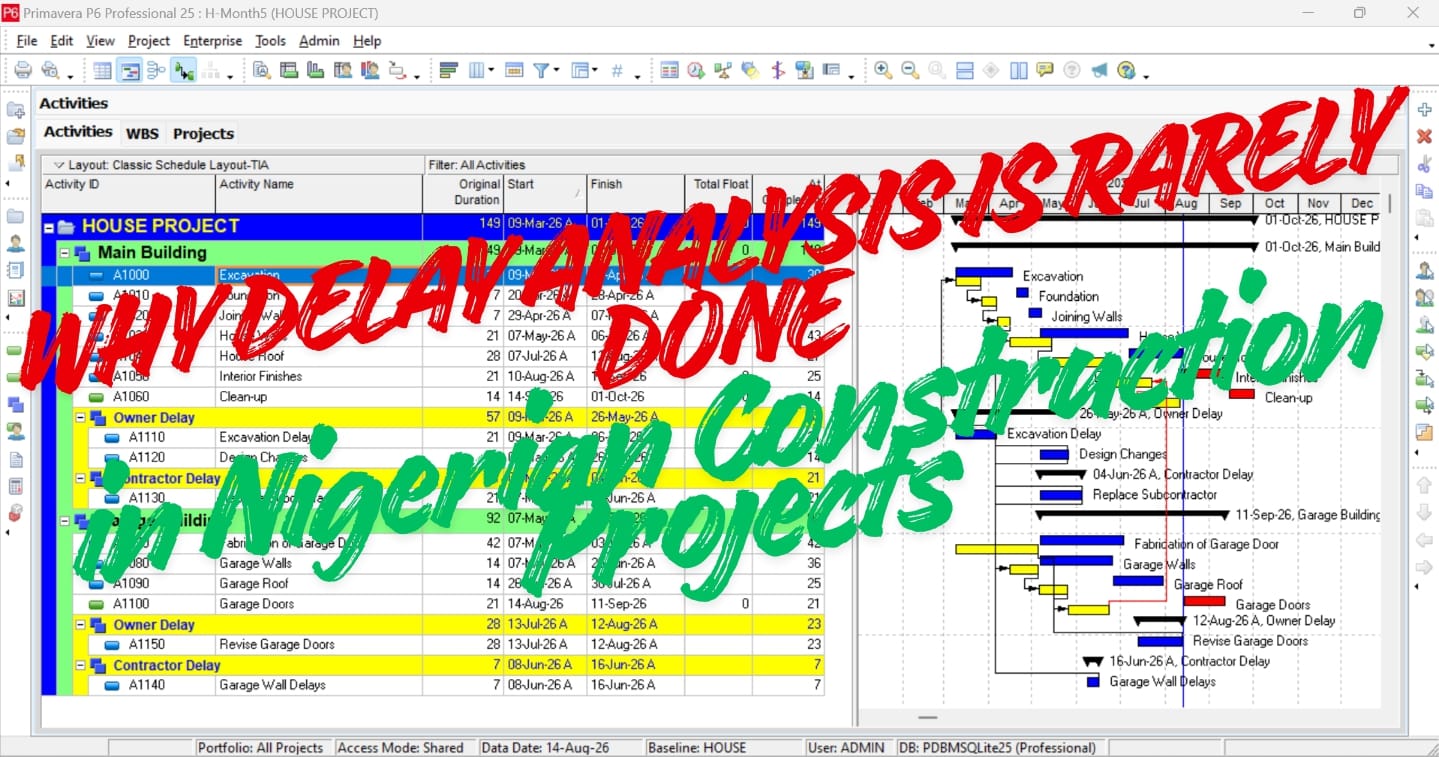
In many parts of the world, delay analysis is a routine part of managing construction contracts. Project planners regularly use techniques such as Time Impact Analysis (TIA) to determine how specific events affect the completion date of a project. The process helps establish entitlement to Extension of Time (EOT) and, in some cases, additional costs.
Yet, in Nigeria, delay analysis still appears to be relatively uncommon in day-to-day project practice. This absence is noticeable, especially when compared with international projects that follow structured contract administration procedures.
Why is this the case?
The answer is not straightforward. Several structural, contractual, and cultural factors seem to contribute to the limited use of formal delay analysis on Nigerian construction projects.
1. Limited Use of Contractual Delay Provisions
Many delay analysis techniques were developed to support structured contract frameworks such as those issued by the FIDIC, NEC, or the Joint Contracts Tribunal. These contracts clearly define procedures for notice of delay, Extension of Time claims, and supporting evidence.
In Nigeria, however, a significant number of projects either:
rely on heavily modified versions of these contracts, or
operate with loosely administered contractual procedures.
When contract administration is informal, the motivation to conduct rigorous delay analysis naturally weakens. Instead of structured analysis, parties often resort to negotiation or informal agreements.
The result is that delays are acknowledged, but the technical effort required to quantify them is often skipped.
2. Weak Scheduling Culture on Some Projects
Delay analysis depends on one fundamental requirement: a reliable baseline schedule and regular updates.
Unfortunately, many projects do not maintain schedules at the level required for forensic delay analysis. Schedules may be created at the beginning of a project, using tools like Primavera P6 or Microsoft Project, but they are not consistently updated as the project progresses.
Without updated schedules, techniques such as Time Impact Analysis become difficult to apply. A delay analyst needs a clear record of how the project was progressing at the time the delay occurred. When those records do not exist, the analysis becomes largely speculative.
From experience, it is not unusual to see projects where the schedule becomes a static document after the kickoff meeting.
3. Limited Awareness of Delay Analysis Methods
Another factor may simply be awareness.
Many engineers and site managers in Nigeria are excellent at solving practical construction problems. They can mobilize resources quickly, navigate procurement challenges, and keep work moving under difficult conditions.
However, formal delay analysis is a specialized discipline. Techniques such as:
Time Impact Analysis
Windows Analysis
As-Planned vs As-Built
are often discussed in project controls training programs, but they may not yet be widely practiced across the industry.
In some cases, project teams only begin to explore these techniques when working on international projects where detailed claims documentation is required.
4. Dispute Avoidance Through Informal Negotiation
There is also a cultural dimension worth considering.
In many Nigerian projects, disputes are frequently resolved through negotiation rather than formal claims processes. Contractors and clients often prefer to reach practical compromises instead of escalating issues through contractual mechanisms.
This approach has advantages. It can preserve working relationships and avoid lengthy disputes.
At the same time, it reduces the incentive to conduct technical delay analysis. If the outcome will be negotiated anyway, the effort required to perform a detailed schedule analysis may seem unnecessary.
5. Cost and Resource Constraints
Conducting a proper delay analysis requires expertise and time. Organizations may need:
trained planners,
detailed schedule data,
and sometimes independent delay analysts.
For many projects, particularly smaller ones, allocating resources to this level of analysis may not seem economically justified.
Instead, the focus remains on completing the project rather than documenting every schedule disruption.
6. When Delay Analysis Actually Appears in Nigeria
Interestingly, delay analysis does appear more frequently in certain types of projects within Nigeria.
For example:
large oil and gas developments,
international EPC contracts,
and projects involving multinational contractors.
These projects typically adopt stricter contract administration procedures and require detailed schedule reporting. Under those conditions, delay analysis becomes much more common.
In other words, the capability exists, but the environment simply does not always demand it.
A Changing Landscape
There are signs that this situation may gradually change.
As Nigerian construction projects become larger and more complex, the need for structured project controls is increasing. More planners are becoming familiar with advanced scheduling tools, and organizations are beginning to recognize the value of maintaining defensible schedule records.
Delay analysis, in that context, may move from being an occasional exercise to a more regular part of project management practice.
For those of us working in planning and project controls, this shift is already visible in small ways such as more training programs, more discussions about Extension of Time claims, and a growing interest in professional scheduling standards.
The question now is not whether delay analysis will become more common in Nigeria, but how quickly the industry will adopt it.
Latest Posts
Stay informed with valuable Primavera P6 tips and project controls insights delivered straight to your inbox.

Gbemi Jacob Adebayo
Gbemi Jacob Adebayo brings about a decade of experience in project planning and controls across engineering and construction projects. Alongside his professional practice, he actively contributes to capacity building and knowledge transfer, delivering Primavera P6 training and providing hands-on job support to planning and project controls professionals. Gbemi also applies his expertise through consulting engagements, supporting organizations in schedule development, progress monitoring, and data-driven project decision-making.

Step into the world of project controls. Gain hands-on experience and career-ready expertise.


Get in touch
Feel free to get in touch with us via email: support@glintpm.com